
3.3 — Biodiversity loss
Mycorrhizas — the roots of the roots
Page 1 / 6
What are mycorrhizae and what makes them unique?
If you enjoy picking mushrooms or walking in a forest, you have almost certainly encountered mycorrhizae.
Mycorrhizae are fungi that live in the soil in symbiosis (close association) with plant roots (Genre et al., 2020). They are often described as “the roots of the roots”. To understand why, take a look at the picture below.
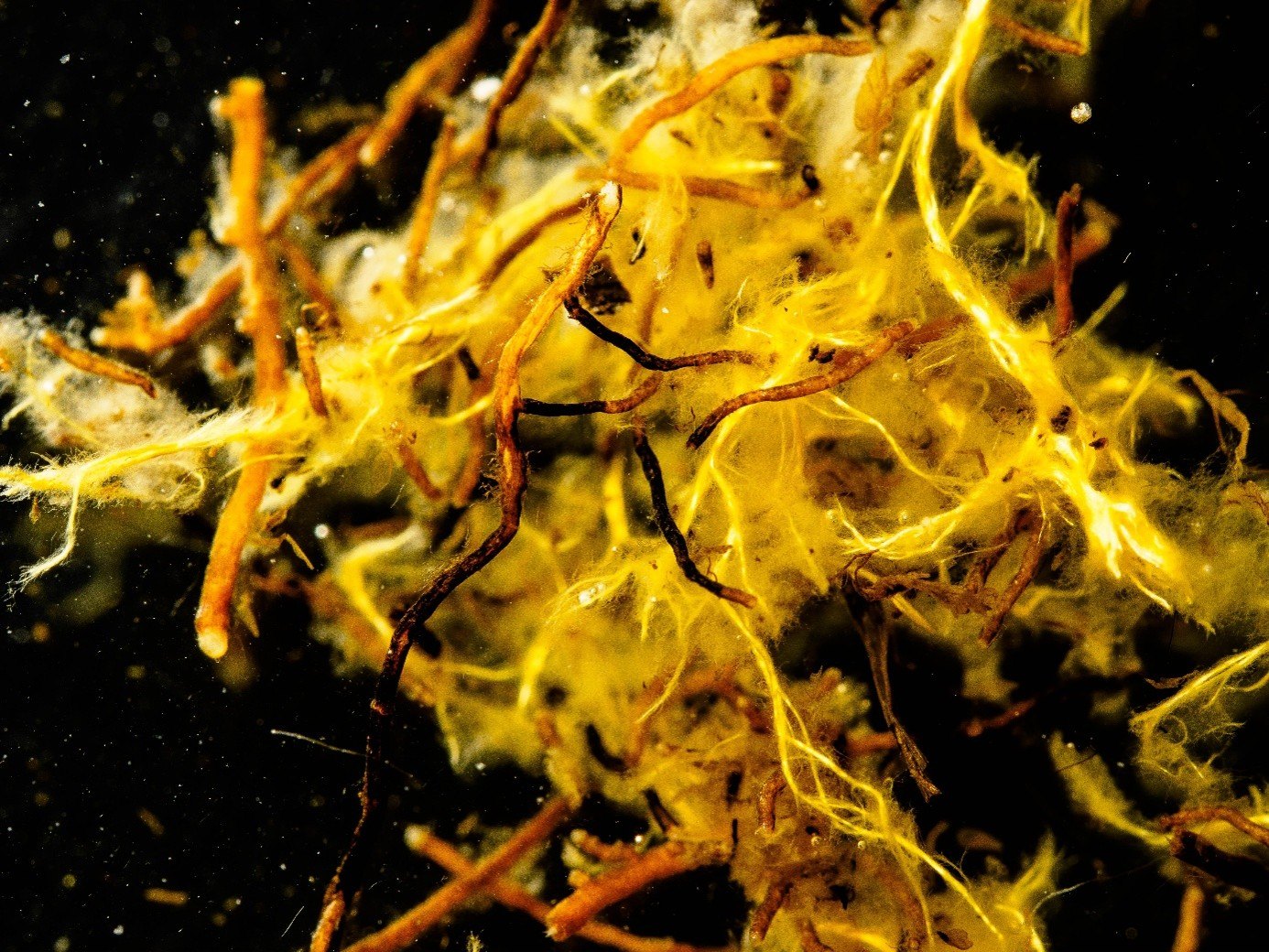
© The yellow mycelium of ectomycorrhiza Piloderma croceum on tree roots by Isabella Børja/NIBIO.
More than 80 % of plant species on Earth live and function in partnership with mycorrhizae (Van Nuland et al., 2025). Their hyphae (fine filaments) connect plant roots to the surrounding soil and enlarge the volume of soil available for plant nutrition and water uptake. In return, the fungus obtains energy from the plants in the form of carbon compounds produced through photosynthesis (sugars).
As you learned in earlier modules, soil is a porous material, meaning there is space between the soil components. Air, water, nutrients, soil organisms and roots move through these pores and channels. Mycorrhizal hyphae bridge the gaps (pore spaces) between soil components and weave soil and roots together. The mycorrhizal fungi explore the soil, take up nutrients and deliver them to the plants with which they are in symbiosis. Mycorrhizae increase the absorptive area of plant roots to a much larger volume of soil than the roots alone could explore. Mycorrhizae connect not only soil particles, but also plants, building a network among them, that is used for the exchange of nutrients, water and “messages” (signalling molecules). Plants and mycorrhizae living in symbiosis constantly share resources. Plants and mycorrhizal fungi have evolved together in symbiosis for millions of years (see Genre et al., 2020).