
3.4 — Peatland degradation
Threats to peatlands
Page 1 / 6
Peatlands under pressure
Before we explore how people have used and transformed peatlands, let’s take a look at where peatlands are found around the world. Peatlands occur on every continent, although their distribution is uneven and they are particularly extensive in some northern regions. The Global Peatland Map provides a broader perspective on their global distribution.
Peatlands have been used by people for centuries. As you learned in Module 1, The Case of Peat, they provide many important soil services, but using peatlands to obtain one service can come at the expense of others. Agriculture, forestry and peat extraction, for example, can provide food, raw materials and employment, but often require peatlands to be drained or otherwise modified.
These human uses have left a major mark on peatlands worldwide. An estimated 12% of the world's peatlands are currently drained and degraded, and around 500,000 hectares of intact peatland are lost to human activities each year. Peatlands are affected by direct pressures, such as drainage, land conversion, peat extraction and inundation, as well as indirect pressures, including air and water pollution, water removal and infrastructure development. Climate change adds further pressure by altering temperature and hydrological conditions.
The problem is particularly pronounced in Europe. Europe has experienced a large historical decline in peatland area, largely as a result of drainage and conversion for agriculture, forestry and other land uses. Agriculture is particularly important: peat soils can provide productive agricultural land when drained, and drainage and conversion of peatlands for agriculture have taken place for centuries.
The consequences of this history are clearly visible in the EUSO Soil Degradation Dashboard. The Netherlands stands out among EU countries for the proportion of its soils affected by degradation, including peatland degradation associated with agricultural land use. Agriculture is a major driver of peat degradation, while dense settlement makes its consequences especially serious – as illustrated by Amsterdam, a city largely built on soft peat and clay soils. So how did centuries of land use transform the Dutch peatlands, and how did this create the peat meadow landscape we see today?
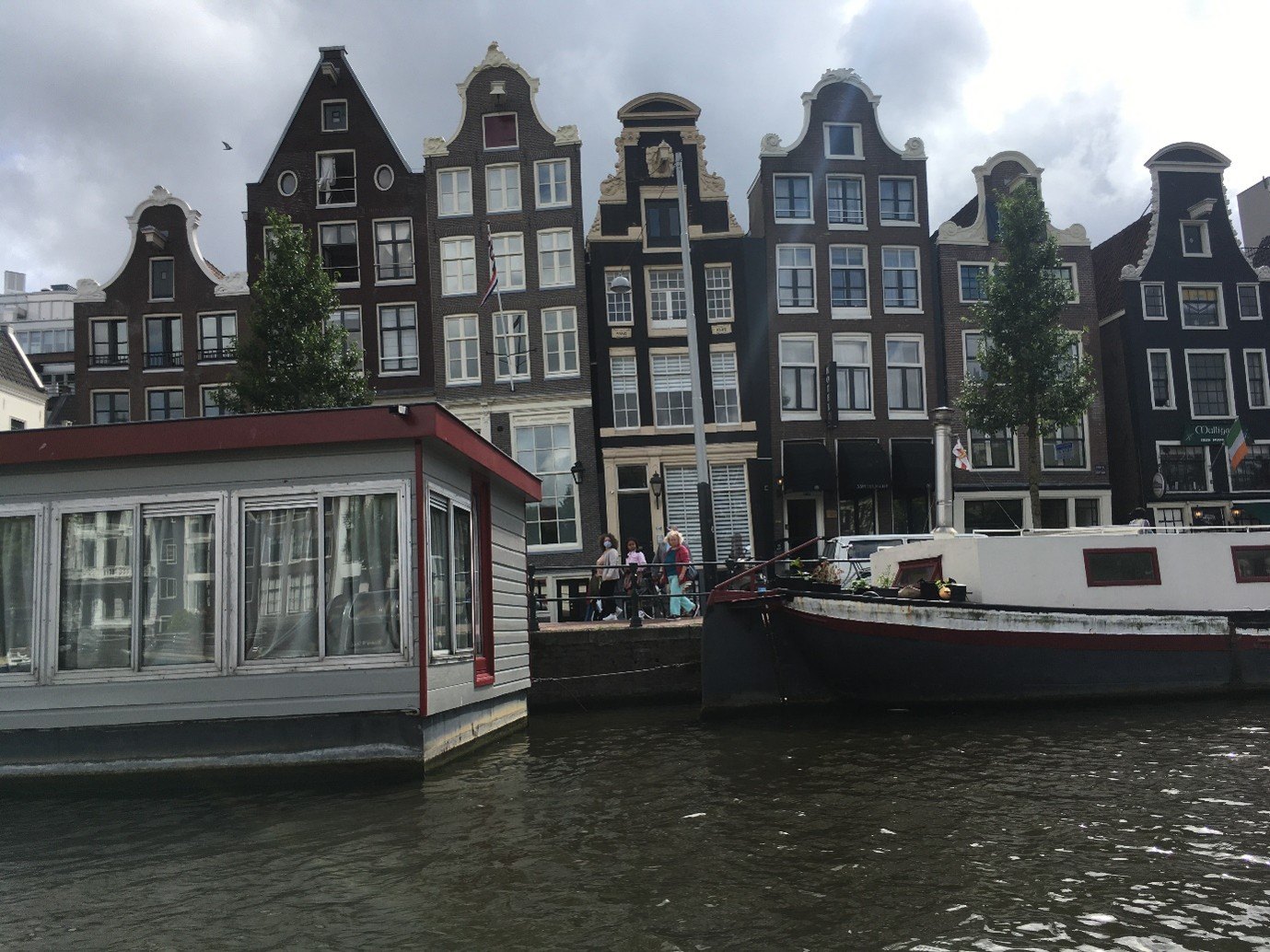
© The ‘Dancing Houses’ along the Amstel in Amsterdam. These centuries-old, visibly leaning houses have become a well-known sight on Amsterdam canal tours. (Source: Amsterdam, stad op palen. 9 September 2021).