4.3 — Soil, heritage, memory and human connection
Soil through the senses
Page 1 / 5
Soil memory through smell, touch and sound
People often encounter soil through their senses before they learn how to describe it scientifically. Its texture, colour, smell, moisture, and temperature can shape their first impressions long before a profile is described or a sample is analysed. That does not make sensory experience more important than scientific knowledge, but it does offer a more direct and personal starting point for noticing soil, becoming curious about it, and paying closer attention to its qualities.
These differences are easy to notice in everyday life. The soil in a plant pot on a balcony feels different from the soil in a school playground after rain. A dry footpath in summer does not behave like a muddy football pitch in winter. A forest floor covered with leaf litter does not feel like hard, bare ground in an open car park. Even without naming the soil types or using scientific terms, we can already notice these contrasts through our senses and experiences. Smell is one of the strongest examples. Many people immediately recognise the earthy smell after rain, even if they could not explain where it comes from. Touch can be just as revealing. Wet clay feels sticky and holds its shape, while sand slips through the fingers, drains quickly, and rarely holds its shape for long. Organic-rich topsoil often feels softer and crumbly, unlike a pale, dry, compacted surface. These differences may seem small, but they change how attention begins. A familiar smell or texture can make us pause, notice the soil beneath us, and become curious about why it behaves as it does.
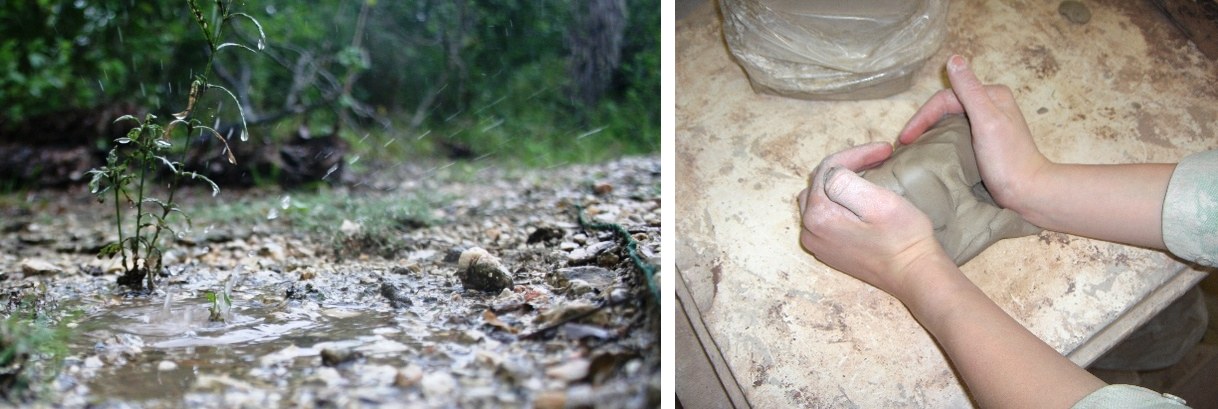
Left: © Rain drops splash in soil, by English: NPS, CC0 1.0, via Wikimedia Commons, no changes were made to the original photo.
Right: © Kneading clay in preparation for pottery making, by Soyer Isabelle at Dutch Wikipedia, CC BY 2.0 BE, via Wikimedia Commons, no changes were made to the original photo
Sound and temperature also shape how people experience soil. Dry soil underfoot sounds different from wet soil, loose leaf litter, or a gravelly surface. Bare soil exposed to direct sunlight usually becomes warmer and drier, while shaded soil beneath vegetation tends to remain cooler and retain more moisture. Vegetation cover, moisture, and surface condition affect not only how soil functions, but also how it feels and sounds within a landscape. These are not trivial details. They are part of how soil becomes present in memory, place, and daily life. Once people begin to notice these qualities, it becomes easier to recognise that soils are not only scientifically different from one another. They are also encountered differently, and that difference often shapes a starting point for interest, attachment and care.
You can explore CURIOSOIL soil sounds and notice what they make you imagine about the life and condition of the soil.