
4.2 — Layers of responsibility: from policy to daily life
People who make soil visible
Page 2 / 5
Education, culture, and public awareness
Education and culture shape how soil is noticed, discussed, and valued. Schools, universities, museums, artists, science communicators, and cultural practitioners can help make soil visible beyond scientific or policy settings.
Educational settings have a distinctive role in shaping long-term soil awareness. Schools can make soil tangible through gardens, composting, soil observation, cultivation, circular resource use, and outdoor learning. Programmes associated with the Eco-Schools network, implemented across many European countries, integrate environmental stewardship into everyday school life. In Portugal, for example, several Eco-Schools have developed Bio-Hortas or biological gardens, where students engage with soil through cultivation practices inspired by ecological principles.
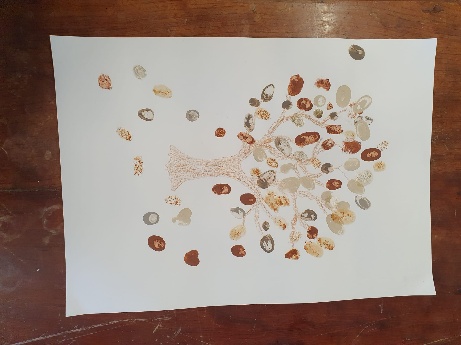
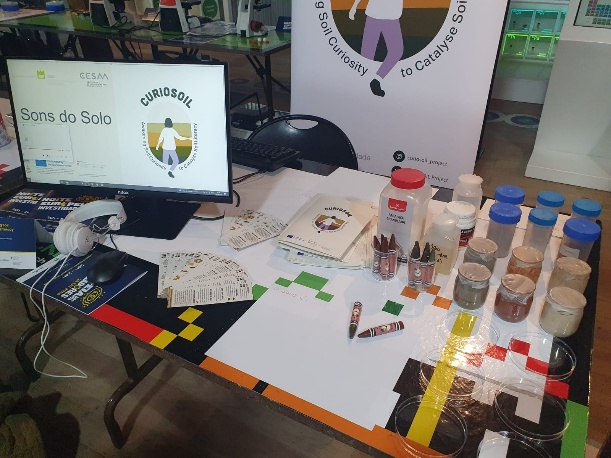
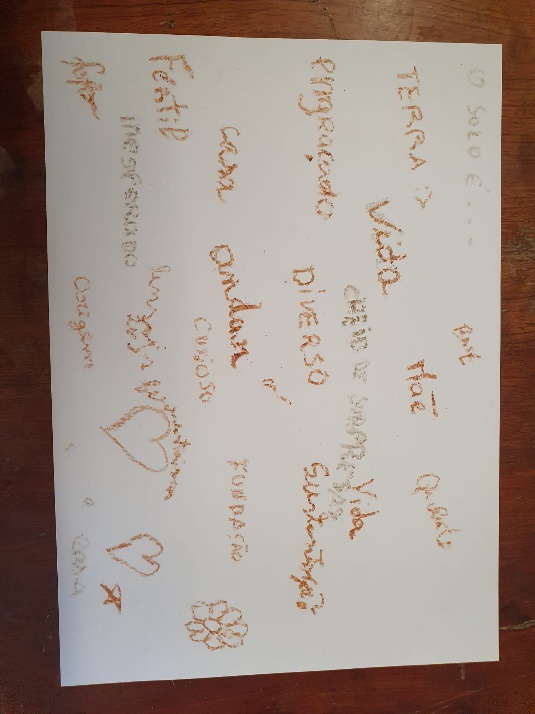
© Soil educational activity in the European Research Night in Fábrica da Ciência, Portugal, by Ana Machado, Aveiro University
Cultural practices can also contribute to soil visibility. Artists, photographers, curators, museums, and public engagement projects may present soil as material, subject, archive, or metaphor. These approaches do not replace science or policy. They create different ways of noticing soil and can reach audiences who may not engage with technical soil information.
Examples include soil-related exhibitions, participatory installations, soil pigment activities, soil tasting exhibitions, and museum-based interpretation. Projects such as SOILSCAPE, SoilTribes, and CURIOSOIL show how artistic and cultural dimensions can support soil awareness.
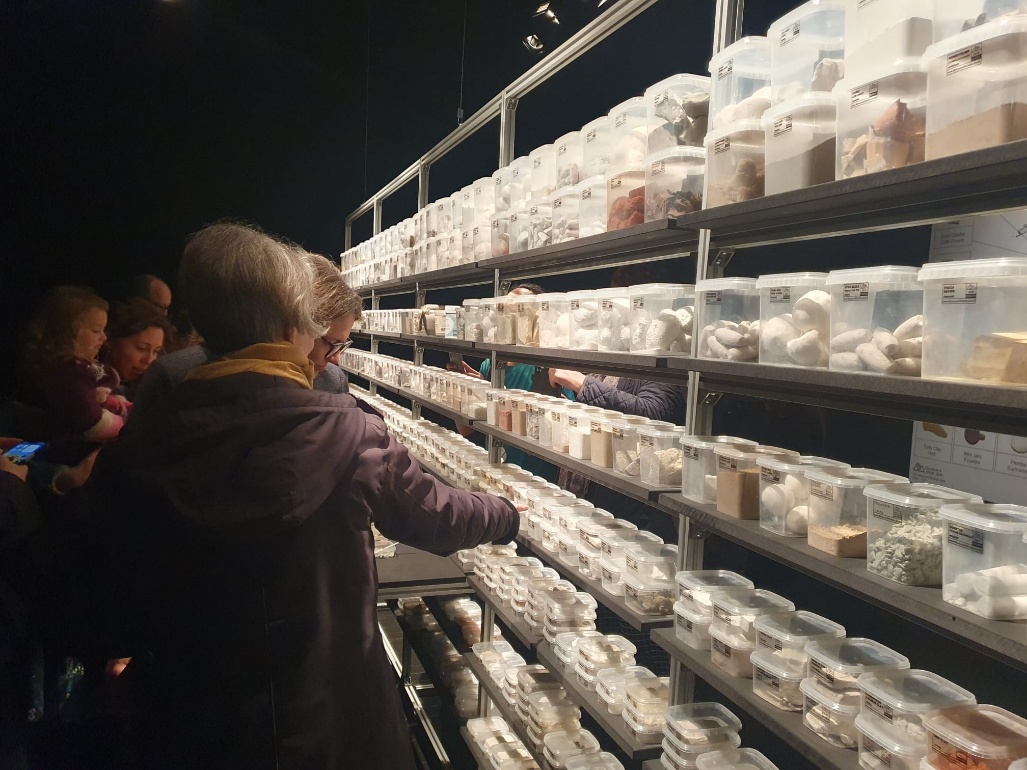
© “Museum of Edible Earth” in Kapelica Gallery, Slovenia by Ana Machado, Aveiro University
✍️ If you encounter soil through artistic expression, how does this differ from encountering it through science, policy, or everyday experience?
Write a few lines in your Soil Diary.