2.3 — Soil biodiversity
Life in the soil food web
Page 5 / 8
Microfauna: The microscopic grazers (≈ 20–200 µm)
Microfauna are the smallest soil animals. This group includes nematodes, protozoa (such as amoebae, ciliates and flagellates), and tardigrades. Although only a fraction of a millimetre in size, they play a central role in regulating microbial communities and recycling nutrients.
Nematodes are among the most abundant animals on Earth and occupy many different positions within the soil food web. Some feed on bacteria, others graze on fungi, and some are predators, omnivores, or plant feeders. Although plant-parasitic nematodes can reduce crop yields, most nematodes perform beneficial functions by regulating microbial populations and contributing to nutrient cycling.
Protozoa primarily feed on bacteria. As they graze, they release nutrients – particularly nitrogen – into the soil in forms that plants and microorganisms can readily use. This transfer of nutrients through microbial feeding interactions is an important component of the soil microbial loop and plays a key role in nutrient cycling in many soils.
Although less abundant than nematodes or protozoa, tardigrades (also known as water bears) are among the most remarkable inhabitants of soil. Living in the thin films of water surrounding soil particles, they feed on plant and animal tissues, contributing to the complexity of the soil food web.
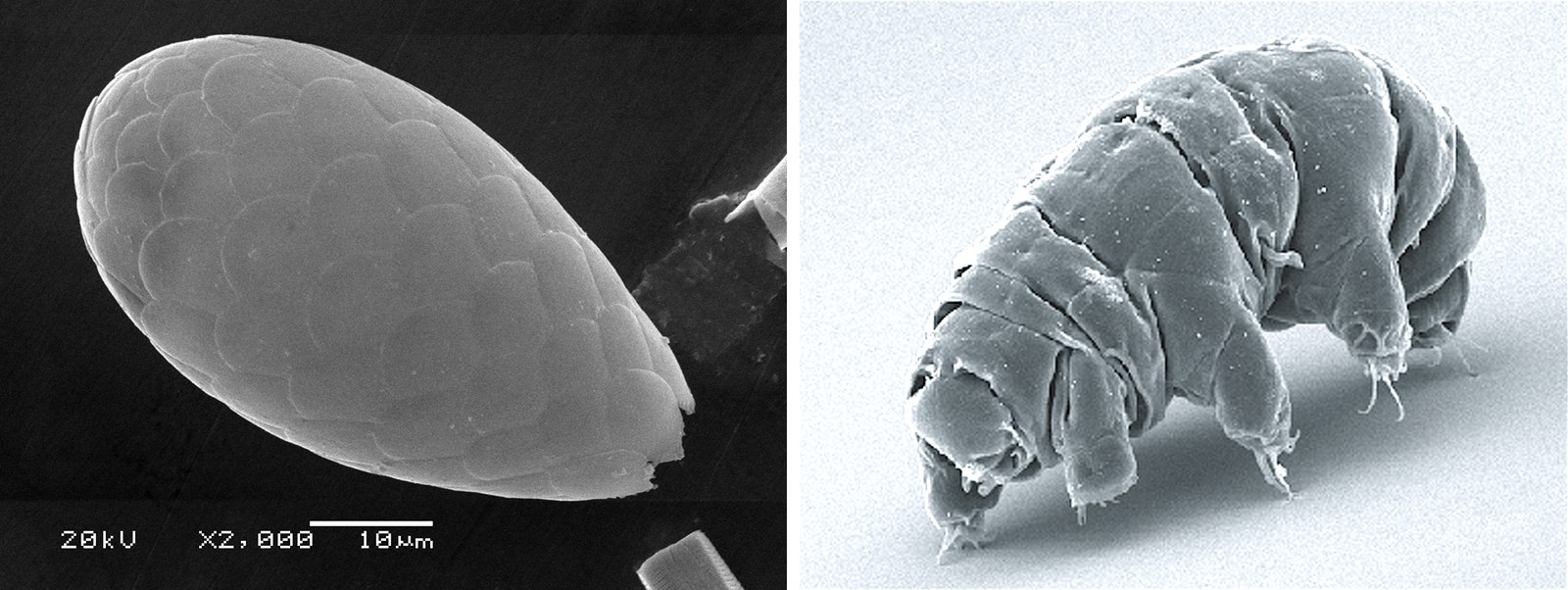
Left: © Microscopic photo of the testade amoeba Euglypha sp. by Berezovska, CC BY 4.0, no changes were made to the original photo.
Right: © Microscopic image of a Tardigrade by Schokraie E, Warnken U, Hotz-Wagenblatt A, Grohme MA, Hengherr S, et al. (2012), CC BY 2.5 Generic, no changes were made to the original photo.