2.3 — Soil biodiversity
Life in the soil food web
Seite 3 / 8
Macrofauna: The visible engineers (> 2 mm)
Among the largest inhabitants of the soil food web are the macrofauna – organisms that can usually be seen with the naked eye and measure more than 2 mm in size. This group includes earthworms, termites, ants, millipedes, woodlice, beetle larvae, slugs and snails, as well as some burrowing mammals.
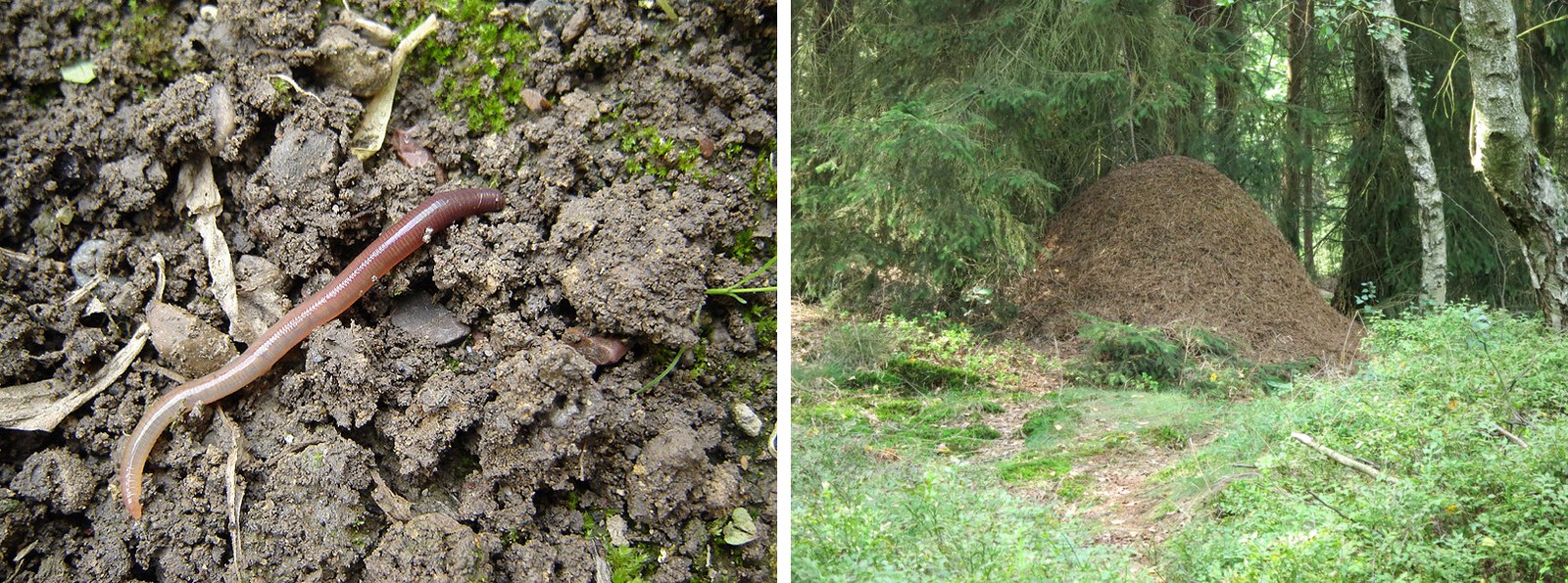
Left: © Earthworm on the ground by Dodo-Bird, CC BY 2.0, no changes were made to the original photo.
Right: © Ant hill by C. Löser, CC BY 3.0 DE, no changes were made to the original photo.
Although they represent only a small fraction of soil organisms by number, macrofauna can have a disproportionately large influence on how soils are structured and how they function. Because they physically modify their surroundings, they are often described as ecosystem engineers.
Creating pathways, pores and habitats
Earthworms are among the best-known soil engineers. As they move through the soil, they create channels that improve the movement of water and air. By consuming organic matter and producing casts, they mix organic material with mineral particles and contribute to the formation of stable soil aggregates. These processes improve soil structure and create favourable conditions for plant roots and other soil organisms.
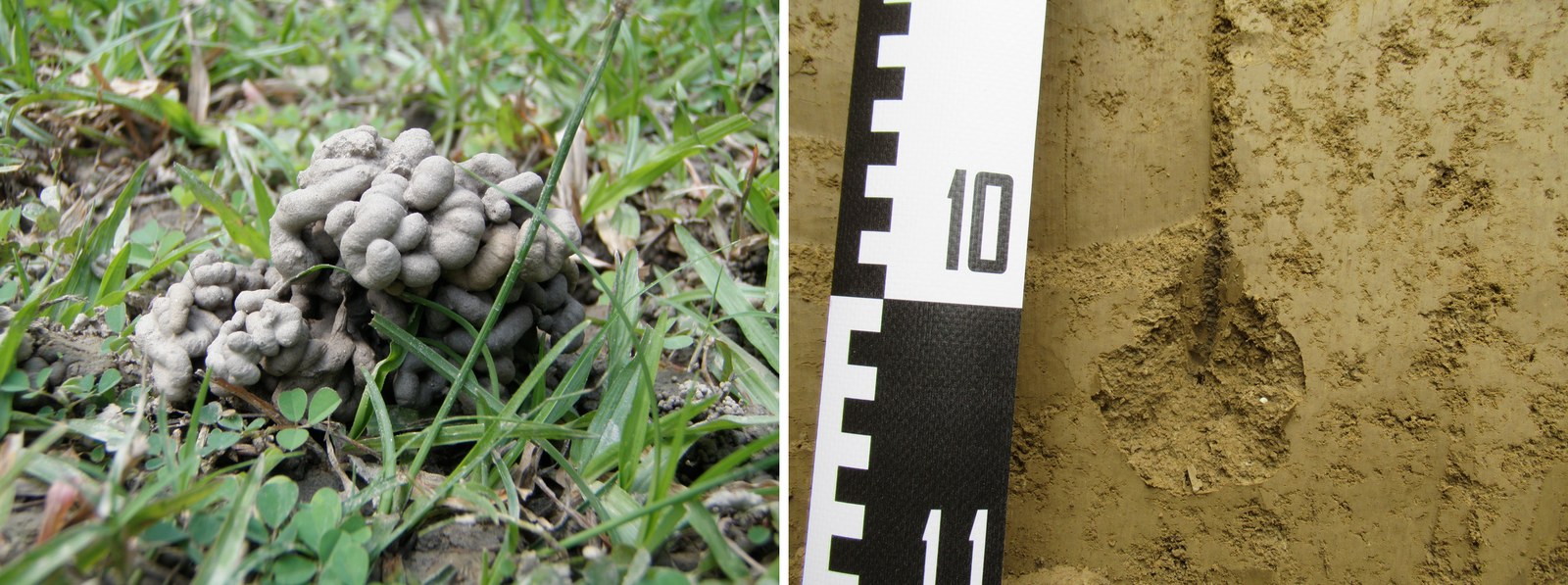
Left: © Earthworm feces by Biswarup Ganguly, CC BY 3.0, no changes were made to the original photo.
Right: © Traces of bioturbation: earthworm channel by Angelika Hromatka, BOKU University.
Other macrofauna perform similar engineering roles. In many tropical and arid ecosystems, termites and ants move large amounts of soil while building nests, mounds, and underground galleries. These structures influence water movement, redistribute nutrients, and create small hotspots of biological activity where plants and microorganisms can thrive.
Macrofauna also contribute to decomposition. Millipedes, woodlice, and some insect larvae feed on dead plant material, breaking it into smaller pieces. This fragmentation makes organic matter more accessible to microorganisms, linking the activities of larger animals with the invisible microbial world.
Scientists have excavated an ant city beneath a hill. Have a look at the fascinating architecture they discovered in the video “Secret Megalopolis of Ants Uncovereed – Truly a Wonder of the World!”. The video is approximately 3 minutes long and was produced by wocomoWILDLIFE.