
2.4 — Soil diversity across land covers
Soil diversity and land covers
Seite 2 / 6
Woodlands
Picture yourself kneeling on the ground in a forest and starting to dig into the soil. Can you recognise the smell of forest soil? You might see dead wood on the soil surface, then a dark, humus-rich topsoil, and lighter soil layers beneath. You probably see rocks and roots everywhere as well.
What are forest soils like?
In a very generalised way, typical forest soil shows:
- An organic layer formed from leaves, needles, and dead wood, more or less fragmented by decomposition. This layer is often called the forest floor.
- Clear layering of horizons: organic layer, dark mineral topsoil, depletion horizon and accumulation horizon of iron, aluminium or clay deeper in the soil profile.
- High biological activity due to the presence and foraging of many roots, and soil micro- and macrofauna seeking for water and food.
- High soil organic matter, especially in cool, acidic or waterlogged conditions.
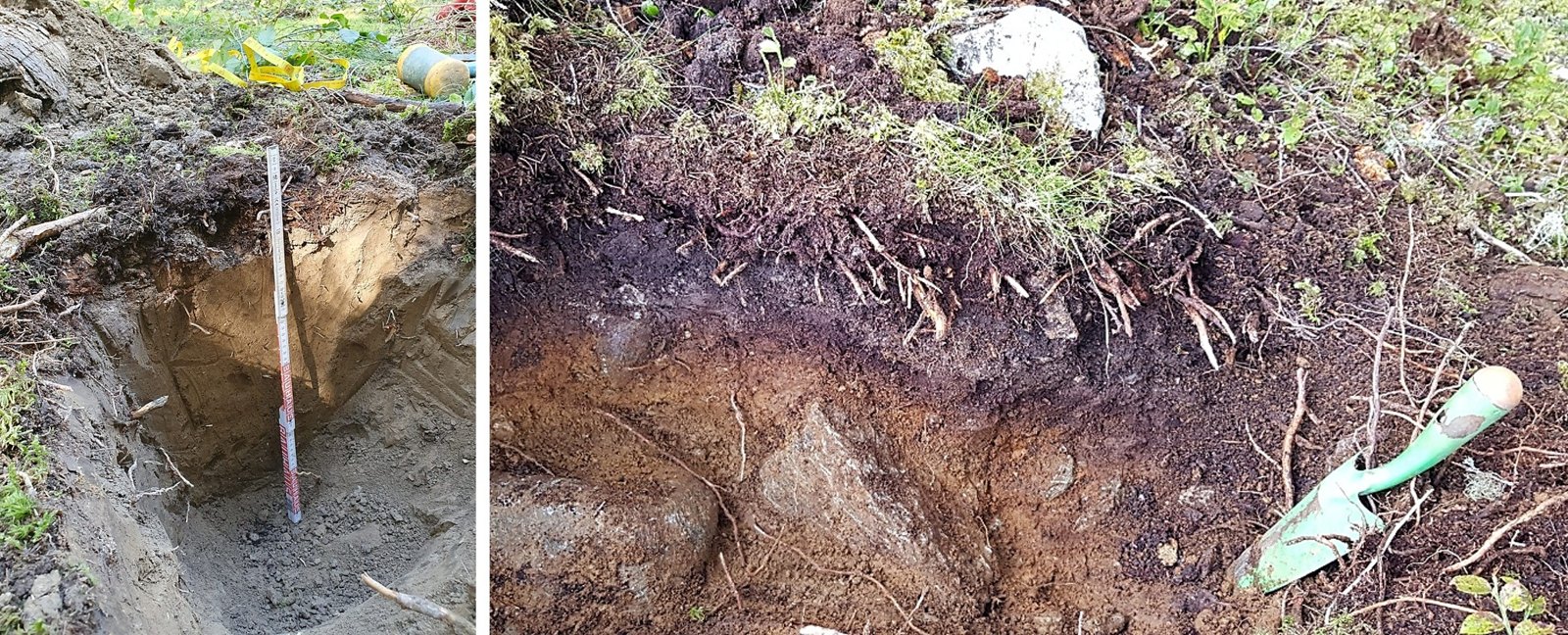
© Forest soils in Austria by Katharina Schott, BOKU University.
Forest soils provide key ecosystem services such as carbon storage, water regulation and retention, habitat for diverse soil organisms, nutrient cycling, and let’s not forget about recreational services. Forests also provide provisioning services, such as timber and biomass, and also food products such as edible mushrooms and blueberries. Forest floors also bear the heritage of past natural disturbances (forest fires with charcoal pieces) or/and human activities (kilns).
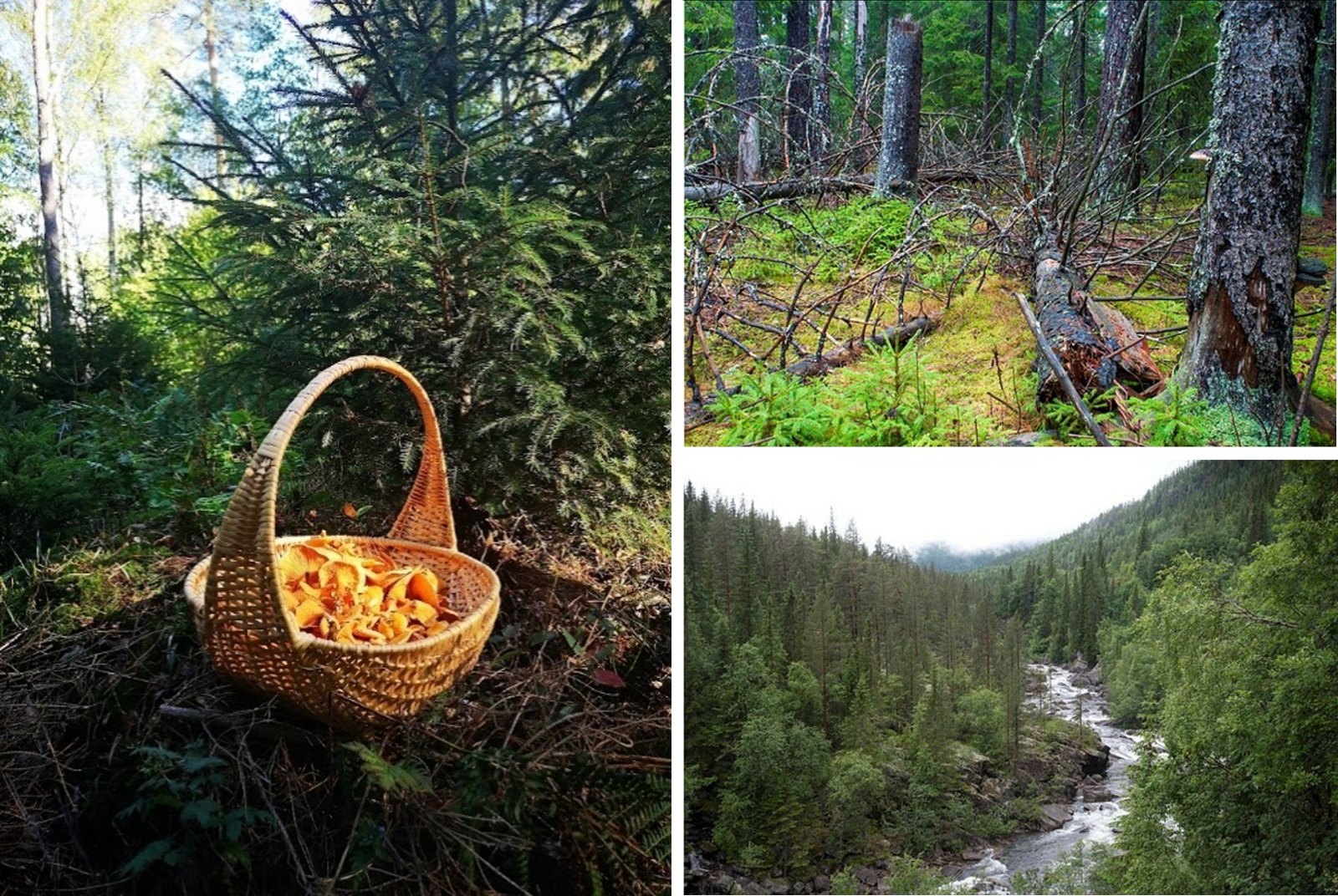
Left: © Mushrooms collected in a forest by Hanne Ugstad/NIBIO.
Right: © Deadwood supporting biodiversity and carbon storage (top) and river landscape illustrating the link between water and soil (bottom) by Dan Aamlid/NIBIO.
What are the many roles of forest soils?
- Climate mitigation: growing trees absorb carbon dioxide from the atmosphere and store it above and below the soil surface for decades.
- Soil erosion mitigation, watershed and landslide protection: vegetation protects the soil from raindrops and wind, limiting erosion. Tree roots hold the soil together, reducing the risk of erosion and landslides.
- Drinking water supply, thanks to the filtering and enriching action of humus-rich soils.
- Forests are also fertilised less often than croplands and pastures.
- Harvesting non-timber forest products such as mushrooms and forest fruits.
- Habitat for diverse organisms, supporting biodiversity.
- Maintaining or improving soil health. Soil health is defined in detail in Module 3 in several topics.
If you would like to find out more about forest soils at this point, we recommend reading the articles by Von Wilpert (2022) or Calvin et al. (2025).