
Topic 2.1 — Soil diversity and development
Soil-forming factors: how do soils develop?
Every soil begins with a geological foundation. At its "birth" lies rock — either solid bedrock or loose sediments transported by wind, water, ice, or gravity. In soil science, this starting material is called parent material. Through weathering, rock gradually breaks down into smaller particles.
As soon as microorganisms, plants, and other organisms colonise this material, the process intensifies. Microbes feed on minerals released from weathering and produce substances that enhance further breakdown. Plant roots penetrate cracks and add organic matter as plants grow and decay.
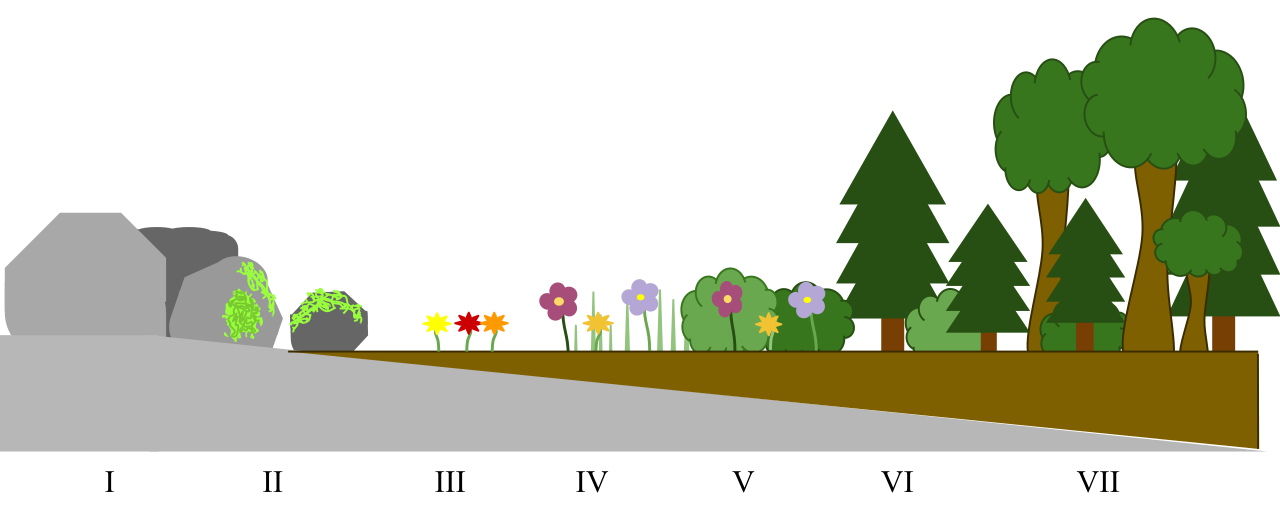
Soil development is driven by climate, organisms, relief (landscape position), parent material, and time. These factors always work together — no soil is formed by just one of them.
- Climate sets the overall pace. Temperature and water availability influence how quickly rocks weather, how active organisms are, and how materials move through the soil.
- Organisms bring soil to life. Microbes, plant roots, insects, and earthworms transform minerals, decompose organic matter, and mix the soil. Humans, too, are powerful soil-shaping agents — some scientists describe humans as a sixth soil-forming factor and link this to the Anthropocene.
- Topography, or position in the landscape, influences how water and sediments move. Soils on steep slopes may remain shallow due to erosion; soils in valleys often become deeper as materials accumulate.
- Parent material provides the mineral starting point. Whether soil forms from granite, limestone, volcanic ash, or windblown dust influences its texture, chemistry, and nutrient availability from the beginning.
- Time allows all these influences to interact. Soil formation may take decades, centuries, or thousands of years.
Strengthen what you've read with this video about the five soil forming factors (~7 min).