
3.1 — Soil organic matter decline
When the carbon balance changes
Page 3 / 5
Arable fields
In contrast to forest soils, arable soils generally contain lower levels of soil organic matter, and their carbon dynamics are therefore strongly influenced by land management practices. Intensive tillage mixes soil layers and increases aeration, which can accelerate microbial decomposition of organic matter. Removing crop residues after harvest reduces the amount of organic material returned to the soil, while simplified crop rotations – growing only a few crop species repeatedly – limit the diversity and timing of organic inputs.
From an arable soil management perspective, the diversity and continuity of plant inputs are particularly important. Cropping systems that include cover crops, diverse and longer rotations, or perennial phases tend to supply more diverse organic inputs to the soil. In contrast, monocultures with long periods of bare soil provide fewer carbon inputs and often increase the risk of erosion. Soil compaction, which occurs when soil is pressed together by heavy machinery, may further affect soil structure and influence how organic matter is stabilized or lost.
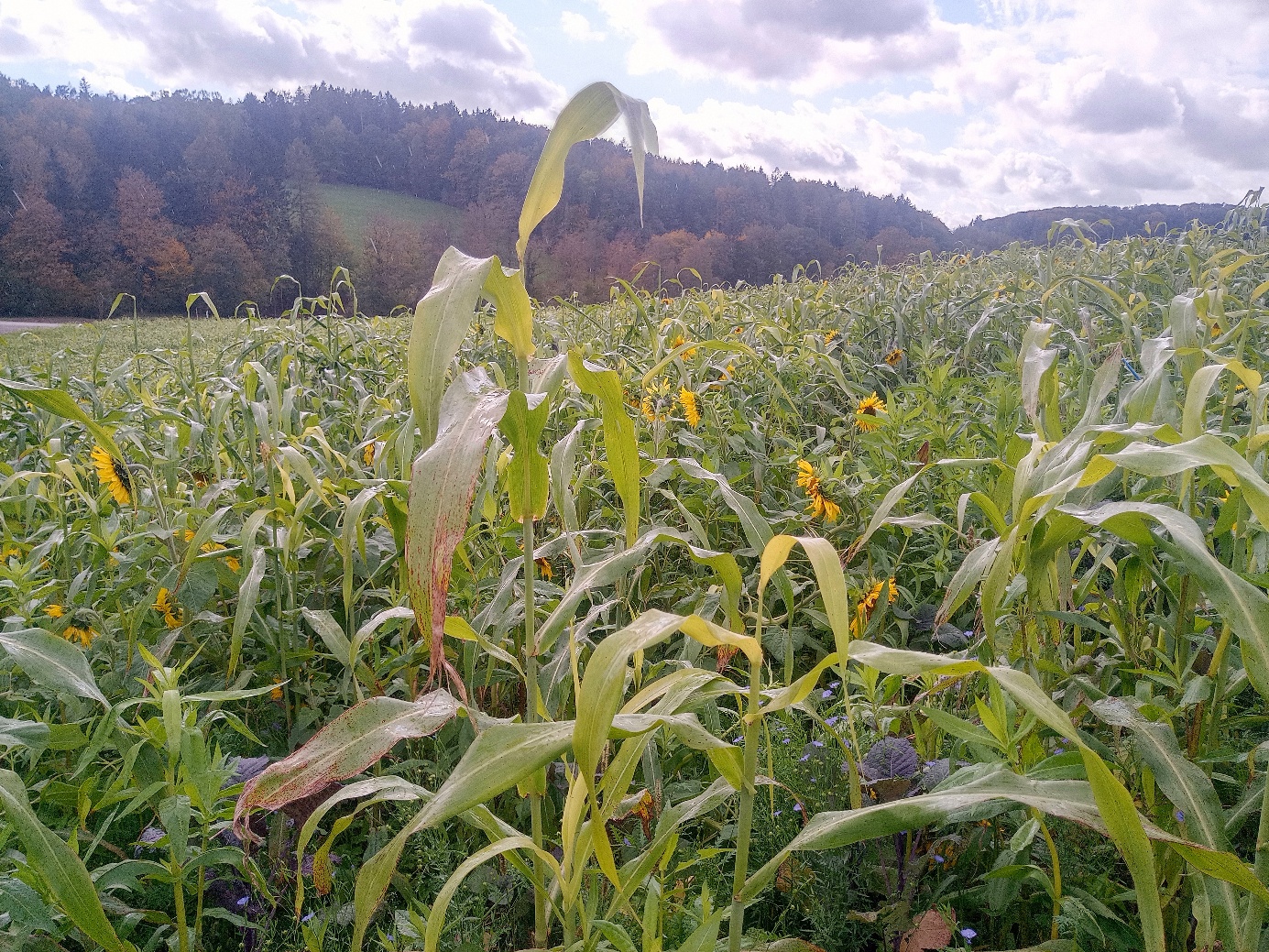
© Diverse crops on a field by Martin Schneider, BOKU University
Environmental conditions interact with these management choices. Warmer temperatures generally increase microbial activity and decomposition, while drought or heavy rainfall can affect plant growth and erosion processes. In recent decades, climate change and land-use change have increased the frequency or intensity of many disturbances, affecting soil carbon balances in both forests and agricultural landscapes.
Together, these examples show that soil carbon levels are dynamic. They respond not only to natural ecosystem processes but also to land management decisions that influence how much carbon enters the soil and how quickly it is lost.
Optional: Are you curious about more details regarding climate-smart arable soil management? Have for example take a look at Bolinder et al. (2020)!