
4.2 — Layers of responsibility: from policy to daily life
From policy to shared responsibility
Página 1 / 5
From policy to shared responsibility
Now that you explored how soil protection is organised through governance, policies, institutions, and legal frameworks. This topic moves one step further: how do these frameworks become visible in society?
Policies can define objectives, standards, monitoring systems, and responsibilities. However, policies alone do not protect soil. What happens in practice depends on how these frameworks are interpreted, implemented, communicated, and translated into everyday decisions.
Soil protection therefore emerges through the interaction between institutions, economic conditions, professional practices, land-use choices, education, and social values. Regulation matters, but it operates alongside many other forms of action.
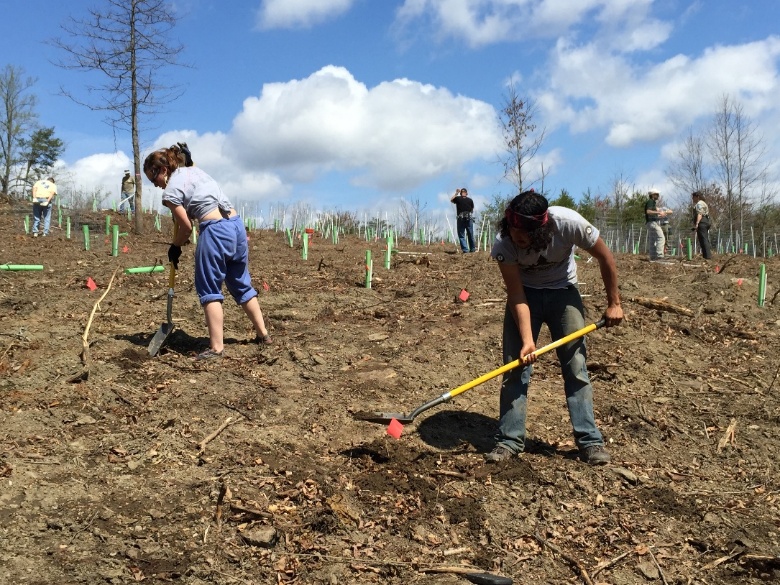
© Virginia Service and Conservation Corp reforestation action, by Virginia State Parks, CC BY 2.0, via Flickr, no changes were made to the original photo.
Optional: For more details on international soil governance have a look at this overview article Bodle (2022), part of a special issue on soil governance with contributions from Food and Agriculture Organization of the United Nations (FAO) and the Global Soil Partnership’s (GSP) experts.