
1.2 — Provision
Tracing everyday products back to soil
Page 3 / 7
Coffee, hot cocoa or tea?
When you drink a cup of coffee, hot cocoa, or tea, you are taking part in a global system that begins in the soil but extends far beyond the field. Specific soils enable coffee shrubs, cacao trees, and tea plants to grow by providing water, organic matter, nutrients, and physical support. These soil conditions shape yields and quality, but they are only the starting point.
The global demand for products such as coffee, cocoa, and tea also creates pressures on land and soils in producing regions. Many cultivation areas already face challenges such as soil degradation, erosion, nutrient depletion, or deforestation. At the same time, consumption patterns differ greatly between countries and lifestyles, and different diets and consumer habits require different amounts of land and resources worldwide.
After harvest, beans and leaves undergo processing, fermentation or roasting, transport, trading, packaging, and retail. Along the way, many stakeholders are involved: farmers, workers, processors, traders, companies, and consumers across continents. Soil thus connects distant places - fields in tropical regions and cups in your hands - through global production and trade networks.
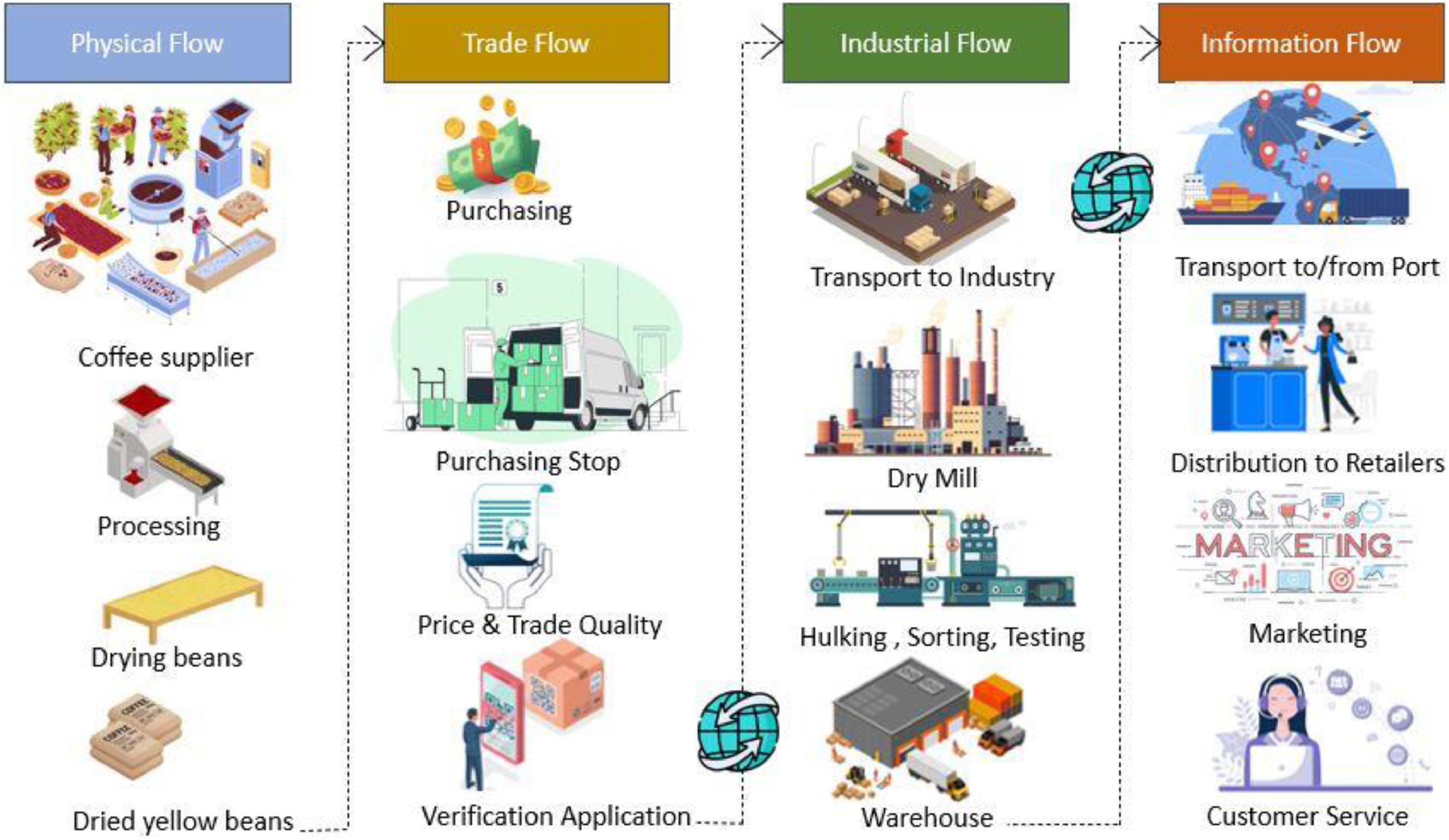
© Comprehensive representation of coffee supply chain management. De Felice et al. (2025) - Decoding the coffee supply chain: A systematic review of stakeholders, sustainability opportunities, and challenges. Published by Elsevier Ltd. CC-BY-NC-ND, no changes were made to the original figure.
Compare this with a locally grown vegetable. Its supply chain is shorter, yet it follows the same logic: soil enables plant growth, which leads to processing and consumption. Both examples show that soil is the foundation of interconnected food and drink systems operating at local and global scales.
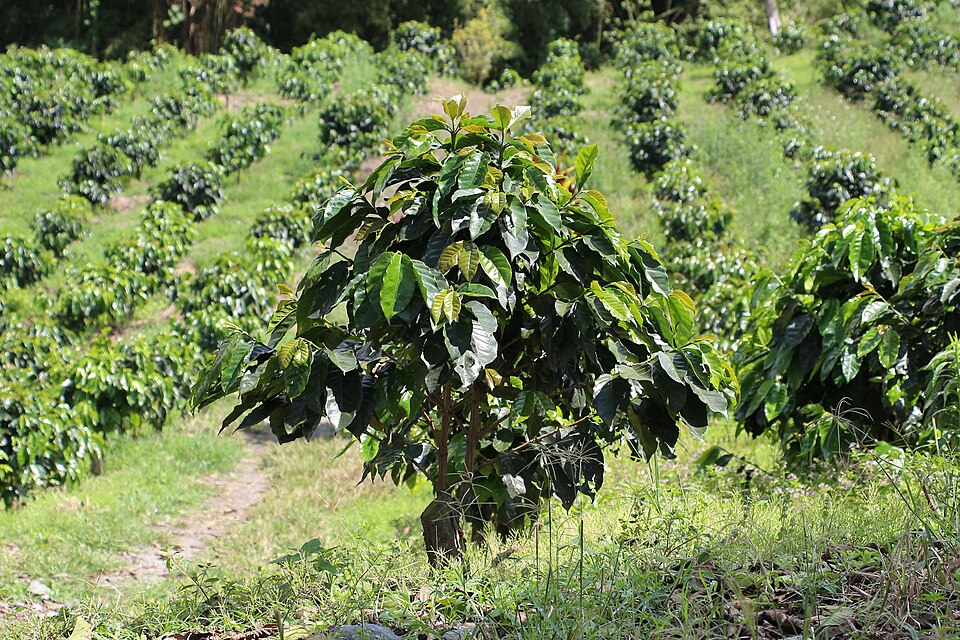
© Coffee tree, Bernard Gagnon, CC BY-SA 4.0, no changes were made to the original phot
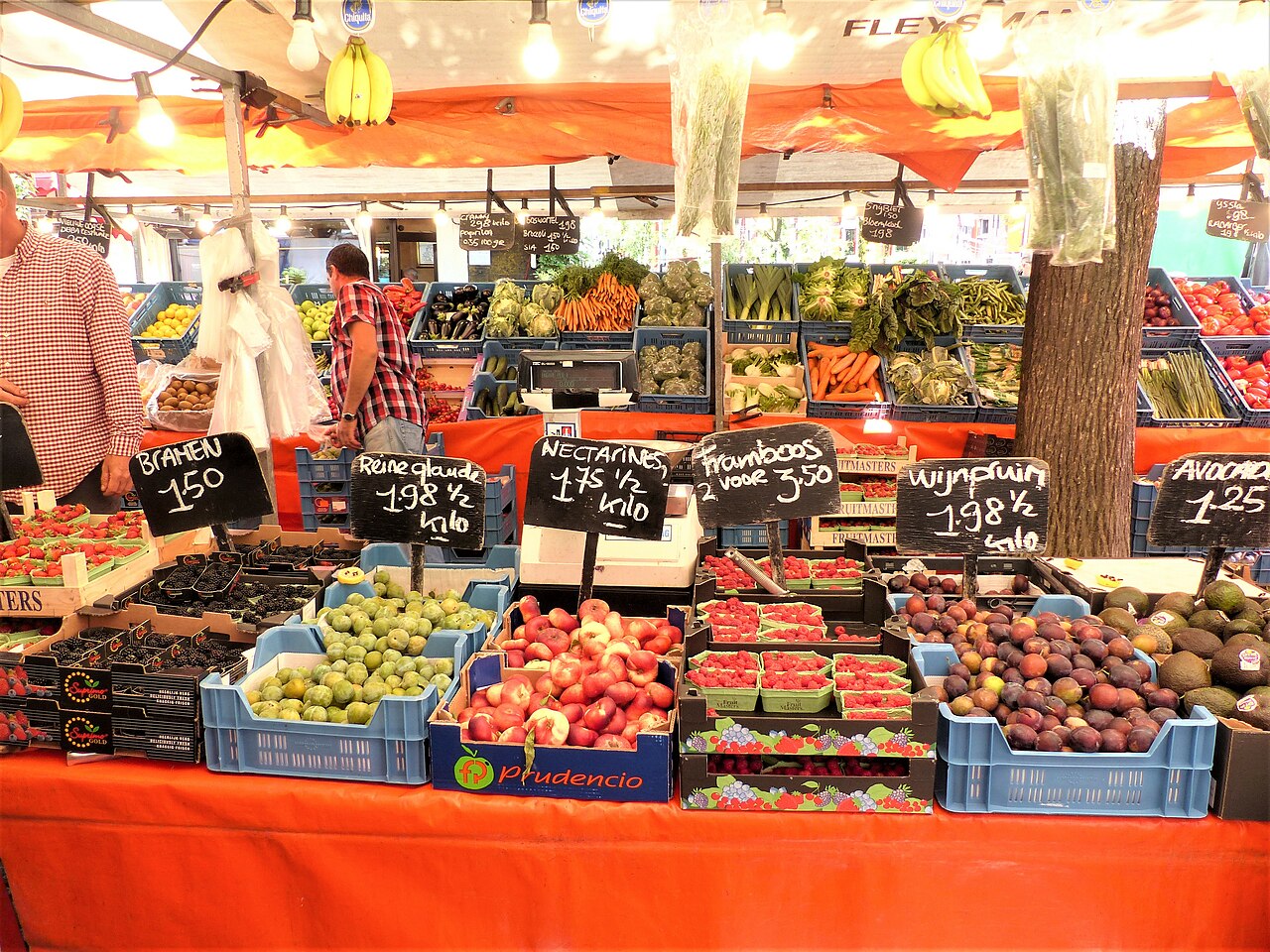
© Farmer’s market, Elekes Andor, CC BY-SA 4.0, no changes were made to the original photo
Optional reading: If you would like to know more about the coffee life cycle, check out this article by De Felice et al. (2025). Figure 9 nicely shows the many stakeholders involved in the way from soil to your cup of coffee.