
4.3 — Soil, heritage, memory and human connection
Soil through generations, stories and imagination
Page 1 / 5
When soils enter memory and imagination: Irish bogs
Soils do not become meaningful only through the objects people make from them. They can also become part of the stories people tell, the memories they carry, and the ways they imagine a place. Some soils become closely connected to family routines, seasonal work, local sayings, childhood memories, or the atmosphere of a particular landscape. Others become associated with mystery, preservation, danger, loss, or belonging. In these cases, soil is no longer just a surface or a natural resource. It becomes part of how a place is remembered, interpreted and understood.
Irish bogs provide a powerful example of this. Here, the soil itself, peat, became so deeply woven into rural life that it shaped tools, seasonal work, language, folklore, poetry, and art. Bogs have been part of life in Ireland for centuries, and their traditions extend far beyond living memory.
For centuries, peat was an important source of fuel for many communities. Turf cutting became part of the annual rhythm of work, especially in late spring and summer, when turf was cut, spread around to dry, turned, stacked, and later brought home. This work depended on specialised tools, such as the sleán, and on practical knowledge of how to move across soft, waterlogged ground and carrying turf back from the bog. In that sense, peat was not only a soil or a fuel. It also helped shape patterns of labour, movement, and seasonal life.
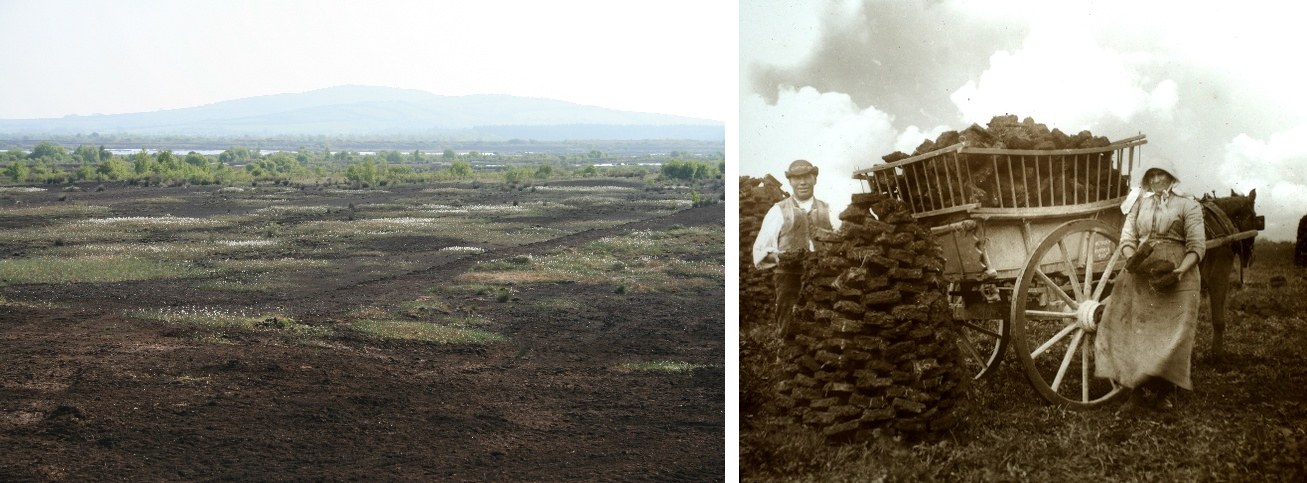
Left: © Bog of Allen – Croghan Hill, by Sarah777, CC0 1.0, via Wikimedia Commons, no changes were made to the original photo.
Right: © Peat gatherers, by Alexander Eric Hasse (1875 – 1935), CC0 1.0, via Wikimedia Commons, no changes were made to the original photo.
This close relationship between bogs, work, and memory helps explain why bogs also appear in poetry and visual culture. In Seamus Heaney’s poem “Digging”, bog work is tied to family labour, memory, and generational continuity, and bog landscapes more broadly have often been imagined as places of depth, preservation, and buried time. A visit to a bog landscape, a painting of a bog, or a film about bog bodies can encourage us to see soil in a different way. Here, soil is no longer simply a surface or a natural resource. It becomes part of how a place is remembered, represented, imagined and felt.
Hear the Irish author Seamus Heaney deliver his poem “Digging”. The video was published by The Wall Street Journal and lasts about 2 minutes. Enjoy!
Seamus Heaney reads his poem 'Digging' (The Wall Street Journal)