1.4 — Support
Soil as living ecosystem supporting all other services
Pagina 2 / 7
No organism works alone
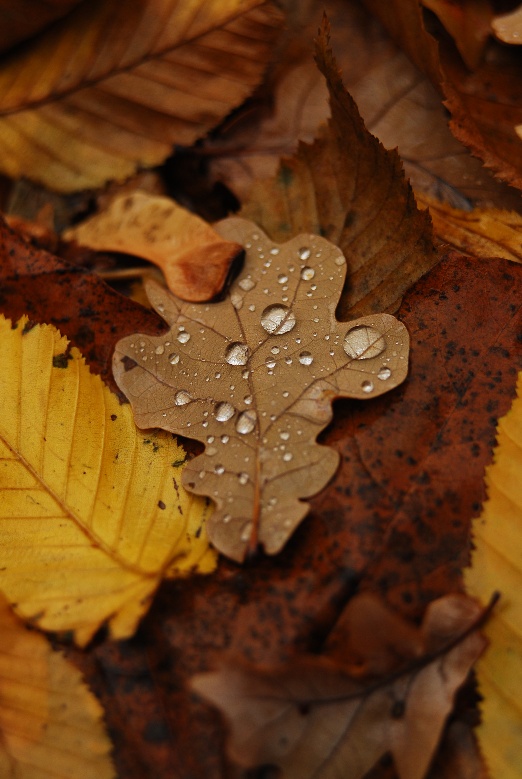
© Oak leaf by Tamara Mahomedova, CC0 1.0, no changes were made to the original photo
Many soil organisms perform specialised tasks. A bacterium can transform certain compounds, a fungus can explore soil beyond the reach of roots, and an earthworm can mix organic matter into deeper soil layers. However, many important soil processes require several organisms working together.
Consider a fallen leaf.
When a leaf lands on the soil surface, larger soil animals such as earthworms, woodlice, and springtails fragment it into smaller pieces. Fungi and bacteria then break down increasingly complex compounds within the leaf. As decomposition continues, other microorganisms transform the released substances into forms that can be reused by plants and other organisms.
What appears to be a single process – the gradual disappearance of a fallen leaf – is actually the result of many organisms interacting over time.
In this sense, soil functions resemble activities in a city. No single person can build and operate an entire city alone. Instead, many individuals contribute different skills and roles. Soil communities function in a similar way.