
3.1 — Soil organic matter decline
When the carbon balance changes
Pagina 1 / 5
Balancing soil carbon
Soil organic carbon levels remain relatively stable when carbon inputs and losses are roughly balanced. In reality, this balance is dynamic and can shift when environmental conditions change or when ecosystems are disturbed.
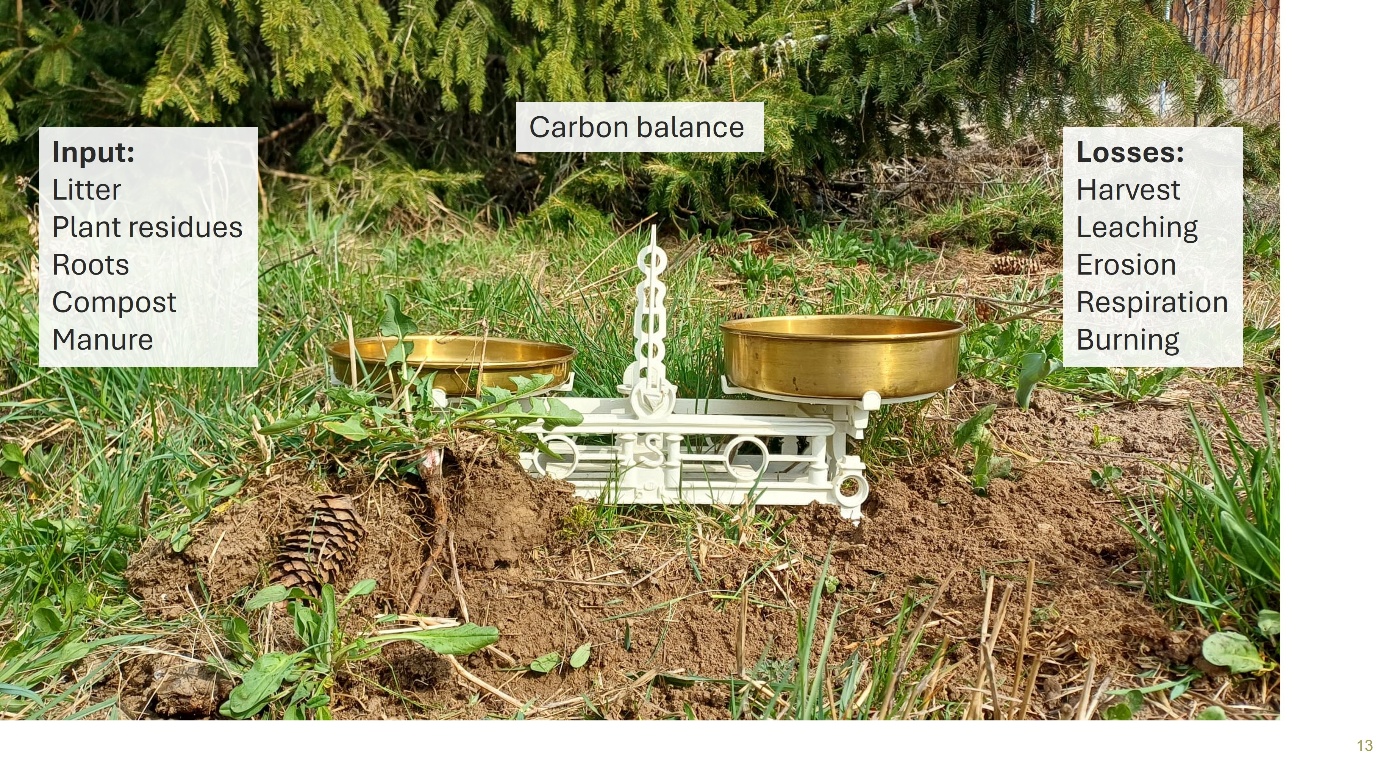
© Schematic representation of the carbon inputs and losses by Sabine Huber, BOKU University. Please note that carbon measurement involves much more than an analogue balance.
Carbon enters soils through plant-derived inputs such as leaves, roots, and crop residues, as well as through organic additions like manure. At the same time, carbon leaves the soil through microbial decomposition, where microorganisms break down organic matter and release carbon dioxide, as well as through processes such as erosion, fire, and the removal of biomass during harvest.
Whether soils gain, lose, or maintain their carbon therefore depends on how these inputs and losses interact. Even relatively small changes in vegetation cover, climate conditions, or land management can tip this balance.
In the following sections, you will see how this happens in practice. In forests, natural disturbances and human activities can rapidly reduce carbon inputs and increase losses. In agricultural systems, management decisions play a key role in shaping how much carbon enters the soil and how quickly it is decomposed or removed.