
4.2 — Layers of responsibility: from policy to daily life
Awareness that grows: soil and society
Page 2 / 4
Food as a daily interface with soil
Food is often one of the first connections people make with soil. A meal can make soil easier to recognise because most ingredients depend, directly or indirectly, on soil services such as plant growth, nutrient cycling, water retention, biodiversity support, and carbon storage.
At the same time, food systems also affect soils. Different production systems can leave different soil traces. Intensive monocultures may increase erosion risk, compaction, or soil organic matter loss. Diversified systems, crop rotations, organic amendments, or agroecological practices may support soil structure, biological activity, and resilience. Land conversion for agriculture, infrastructure, or supply chains may also affect soil sealing, carbon stocks, water regulation, and biodiversity.
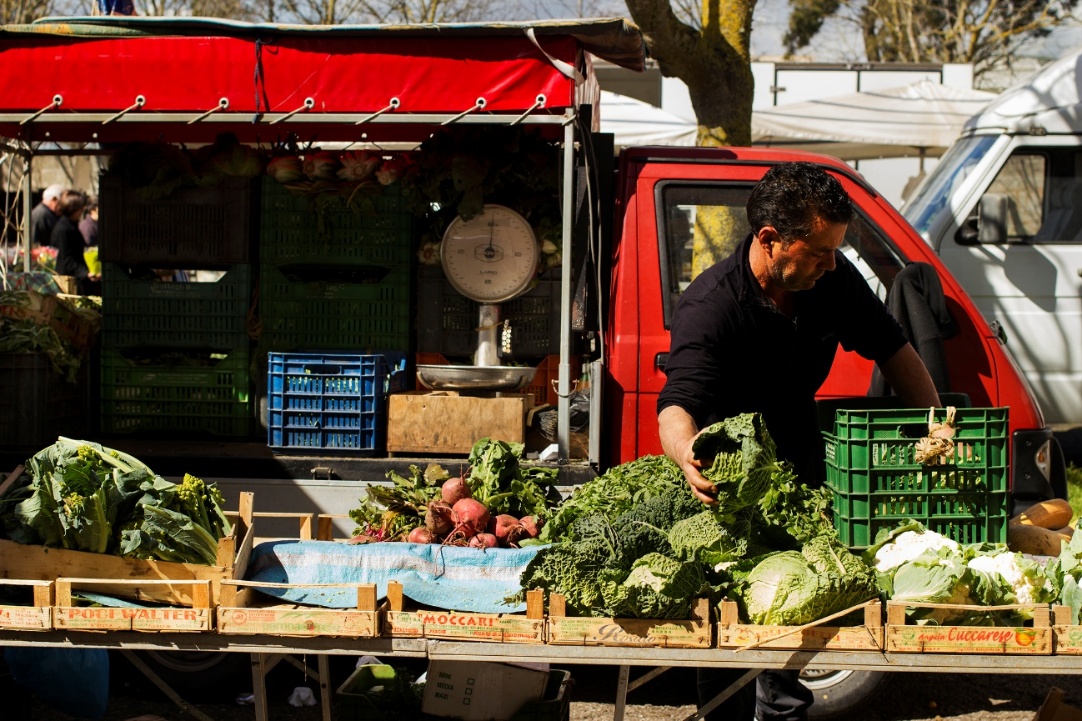
© Local market by European Environment Agency (EEA), CC BY 2.0, via Flickr, no changes were made to the original photo.
This does not mean that individual food choices alone determine soil protection. Consumers do not control production systems directly. Food choices operate within broader socio-economic systems shaped by farmers, land managers, retailers, certification schemes, public policies, markets, cultural habits, and access to information.
Looking at one meal is therefore not about placing responsibility on one person. It is a way to make visible the hidden relationships between soil, land use, production systems, and everyday life. Food offers a familiar starting point because it connects soil with something we encounter every day.
But the relationship between people and soil is wider than food. Soil is also present in buildings, gardens, landscapes, family memories, cultural practices, art, crafts, stories, rituals, colours, textures, smells, and places people feel attached to. Some of these connections were introduced in Module 1 through soil services and everyday life. The next topic moves from recognising these connections to reflecting on how soil can be felt, remembered, imagined, and personally meaningful.