
4.2 — Layers of responsibility: from policy to daily life
Awareness that grows: soil and society
Page 1 / 4
Awareness that grows: soil and society
Soil degradation is not only a biophysical process. It is also shaped by social processes. Land-use decisions, consumption patterns, planning priorities, and production systems are influenced by cultural norms, economic incentives, education, and collective narratives.
Knowledge alone does not automatically lead to behavioural change. What matters is how knowledge is framed, contextualised, and connected to everyday life. Awareness becomes more meaningful when people can recognise how their decisions relate to ecological systems. Soil is often invisible in this respect. Many people benefit from soil services every day without seeing the soils, actors, or land-use choices behind them.
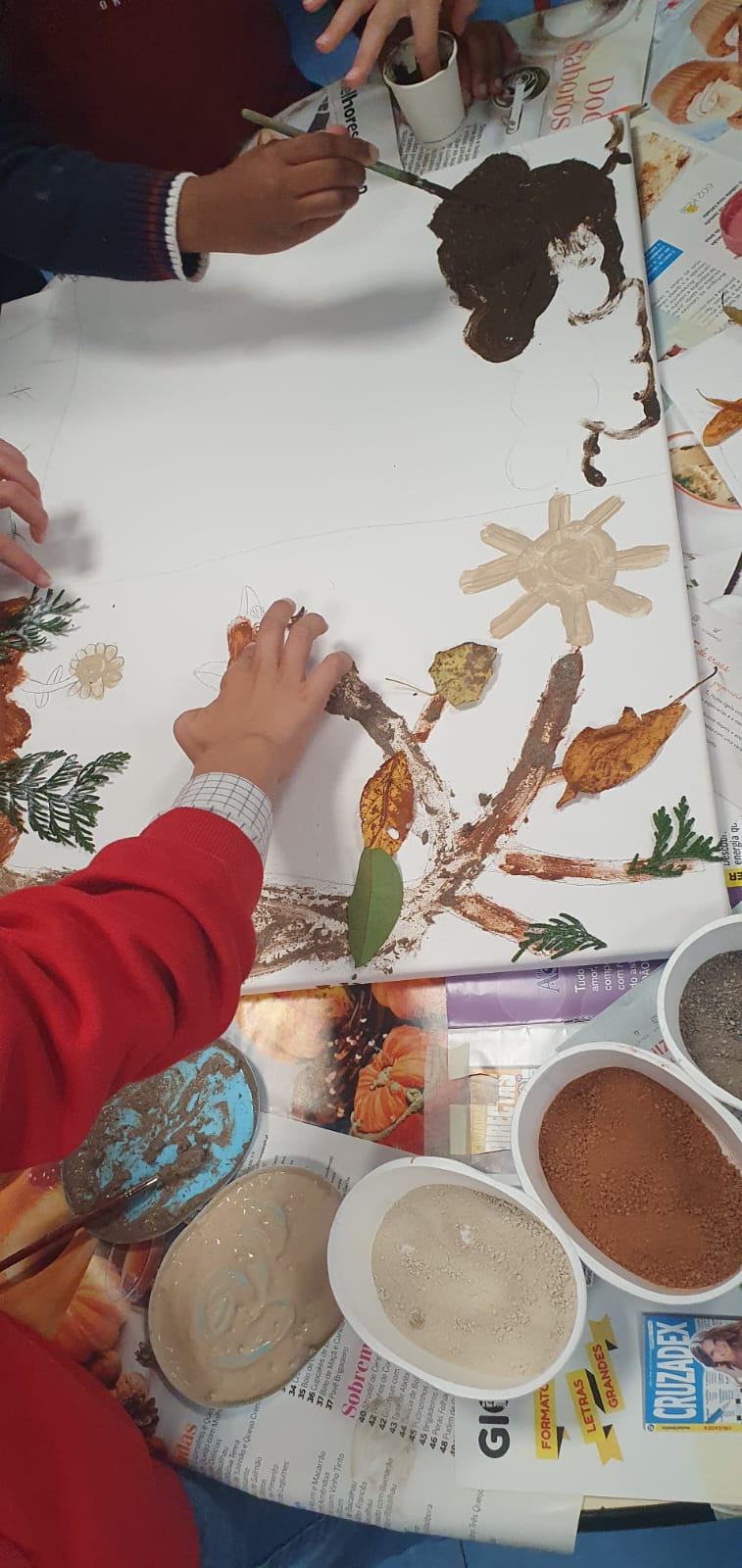
Education plays a critical role in shaping environmental behaviour. When soil is introduced not only as a scientific subject, but as a living system connected to climate regulation, biodiversity, water security, food systems, recreation, and culture, people can develop stronger systems thinking. Experiential education, such as school gardens, field observation, soil painting, composting, or participatory projects, can strengthen ecological literacy and long-term stewardship attitudes.
© “Painting with soil” educational activity with CIAQ-ATL students by Ana Machado, Aveiro University
Understanding soil processes can influence how future professionals design infrastructure, how planners evaluate land use, how consumers understand products, how citizens interpret environmental debates, and how communities discuss local land-use decisions. Education therefore contributes not only to knowledge acquisition, but also to people’s capacity to act.
Storytelling also shapes perception. Media representations, artistic interpretations, community narratives, and public campaigns influence whether soil is seen as a living ecosystem, a disposable substrate, a climate solution, a cultural heritage, or a risk factor. Narratives help translate abstract information into meaning. For example, when soil is framed as essential for food security, climate resilience, or biodiversity, public attention may increase. When soil remains framed only as technical or peripheral, engagement often stays limited. Storytelling does not replace science. It can help make science socially meaningful.
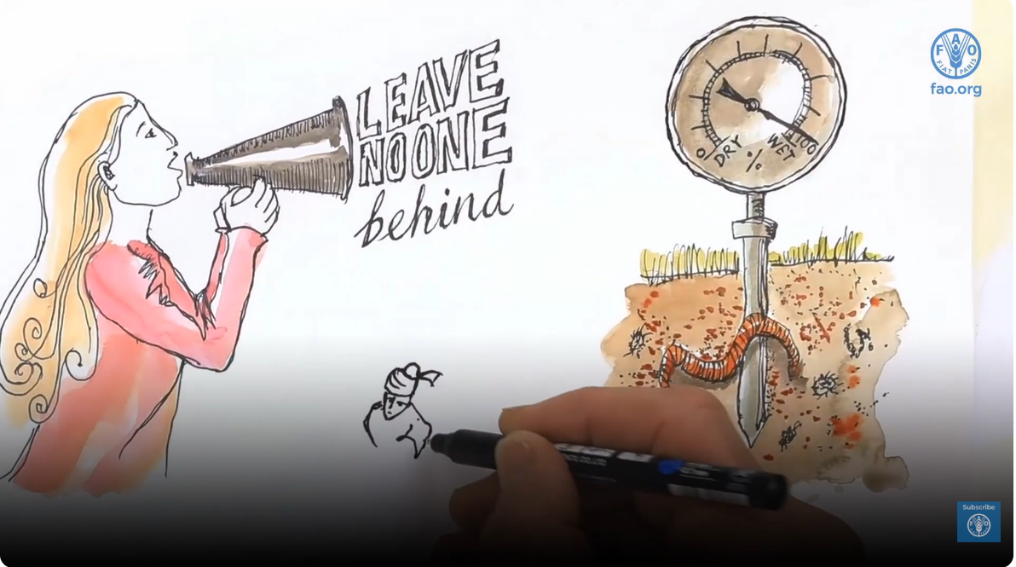
© Soil and Water: a source of life. Video on youtube from Food and Agriculture Organization of the United Nations (FAO).
Soil and Water: a source of life (FAO)